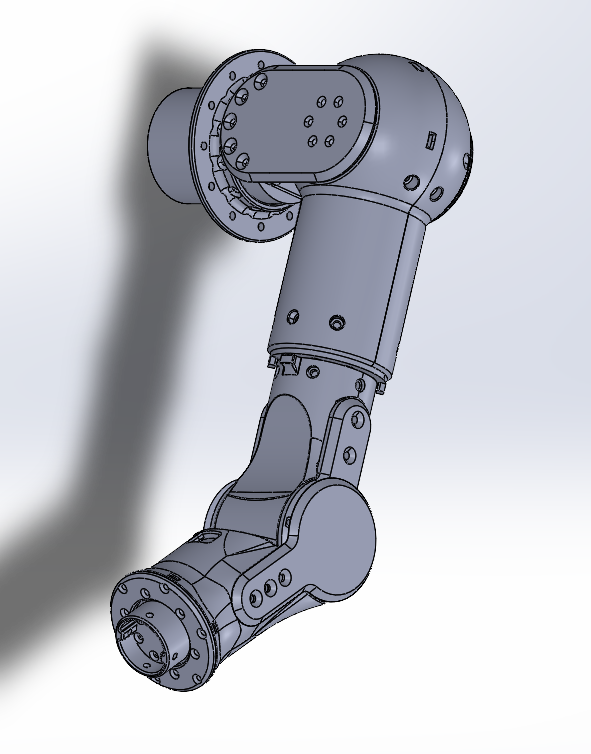
High-Performance Actuator R&D & Kinematic System Design
Techligence Pvt. Ltd | May 2026 – July 2026
During my two-month internship at Techligence Pvt. Ltd., I took full ownership of the mechanical design and rapid iteration of custom high-performance actuators for a 7+ DOF anthropomorphic arm, alongside developing structural subsystems for an AI receptionist robot. Working strictly from first principles and academic literature, I analytically designed, CAD-modeled, and evaluated distinct actuator architectures to handle complex kinematic loads. This included establishing a 50:1 harmonic drive prototype, engineering a dual-stage 49:1 cycloidal actuator to manage severe moment loads at the proximal joints, and developing an ultra-compact pancake-type harmonic drive. Concurrently, I drove the design-to-validation cycle for the receptionist robot's mechanical assemblies to ensure robust deployment reliability.
Note: Due to strict Non-Disclosure Agreements (NDA), full proprietary subsystem layouts and specific integration schematics are restricted from public display. The mechanical architectures detailed below focus strictly on my localized actuator R&D and subsystem verification workflows.
AI Receptionist Robot Subsystems
Managed the end-to-end mechanical engineering lifecycle for structural subsystems intended for customer-facing deployment.
- Design-to-Validation Cycle: Supervised full physical synthesis including detailed CAD creation, physical prototyping, and empirical testing under expected service envelopes.
- Precision Manufacturing: Executed meticulous linear and radial tolerance stack-up analyses to mitigate assembly interferences and guide precision CNC machining and manufacturing parameters.
- Hardware Demo: 🔗 Watch Receptionist Robot Demo (Google Drive)
Literature-Derived Cycloidal Architecture (49:1)
Engineered a highly specialized, dual-stage cycloidal actuator architecture based directly on mathematical formulations from contemporary mechanical research papers. Designed exclusively for high-load proximal joints to manage and distribute severe moment loads across the assembly envelope.
- Kinematic Ratio: Achieved a precise 49:1 reduction ratio by implementing a 7-lobe primary stage feeding into a 6-lobe secondary stage.
- Research Reference: 🔗 Review Reference Literature Paper
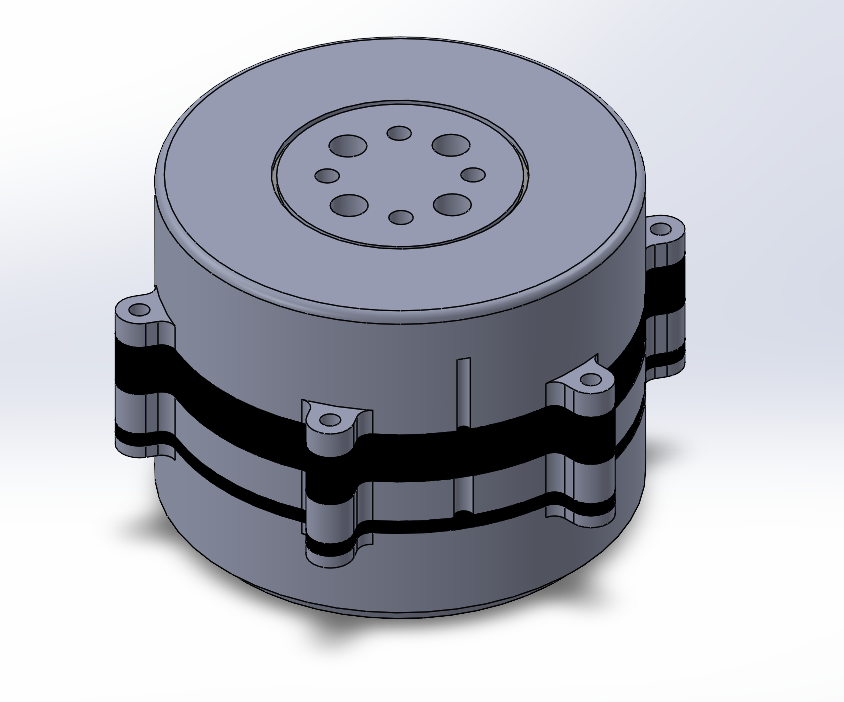
Isometric
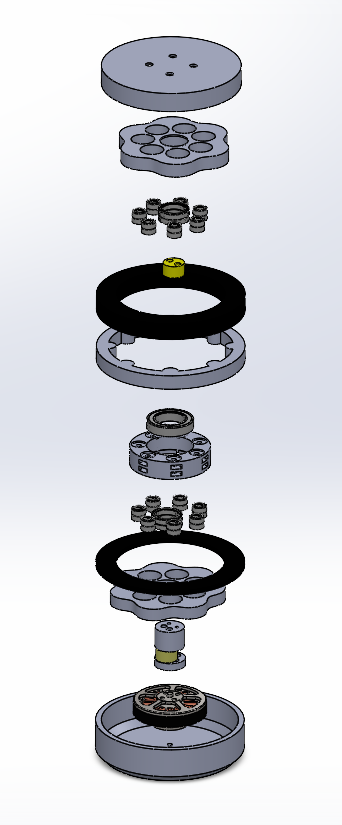
Exploded
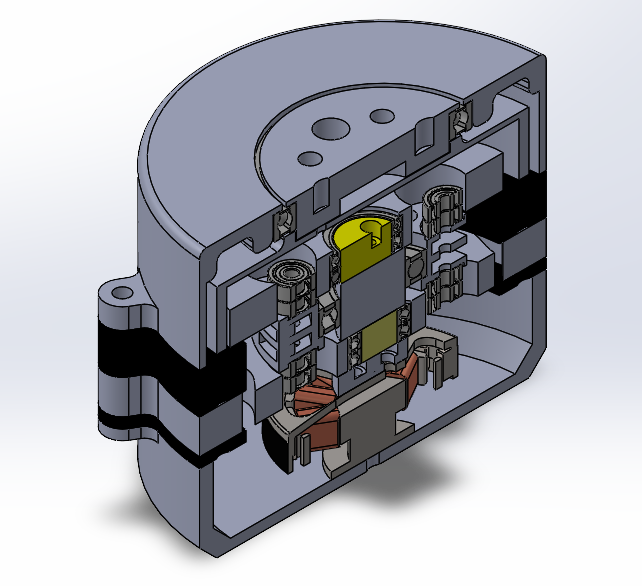
Section
Iterative Harmonic Drive Development
Researched and developed harmonic drives by aggressively iterating flexspline geometry to maximize torque density and backdrivability for mid-joint integration. Both prototype iterations detailed below feature a fully custom flexspline architecture.
Standard Custom Baseline (50:1 Ratio)
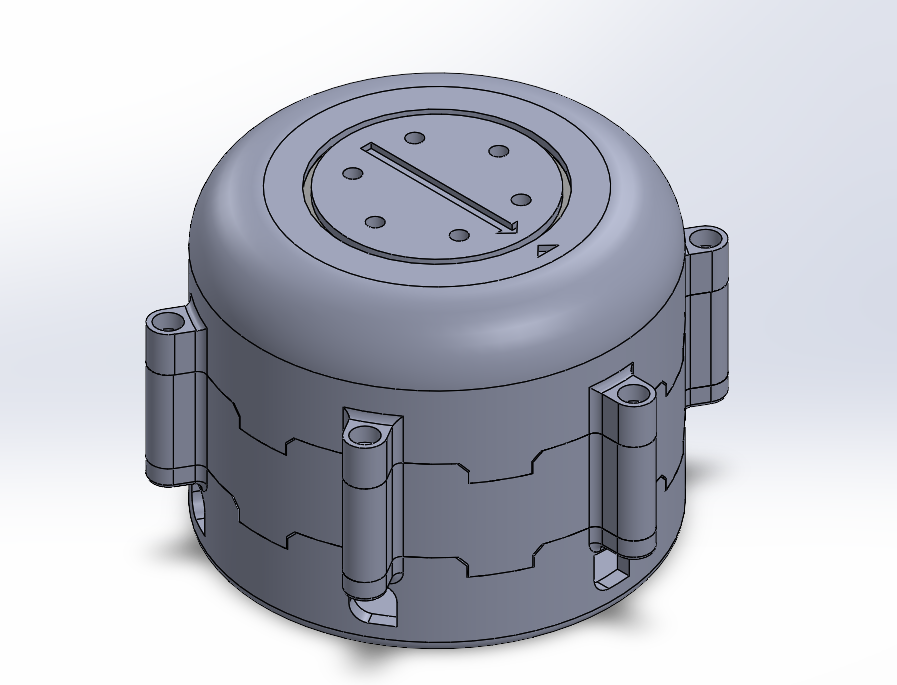
Isometric
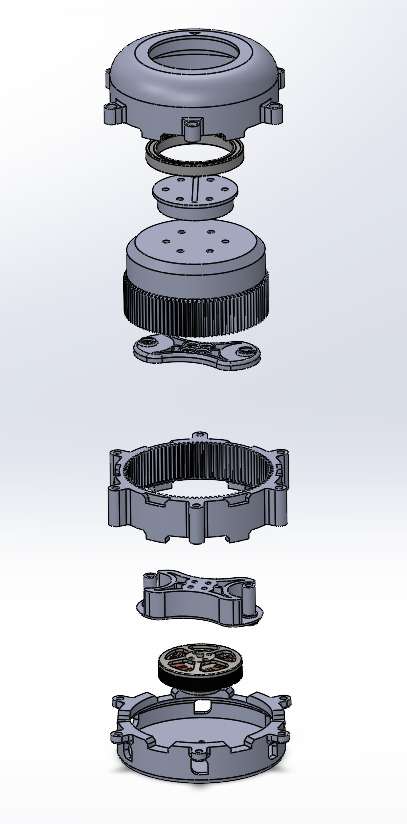
Exploded
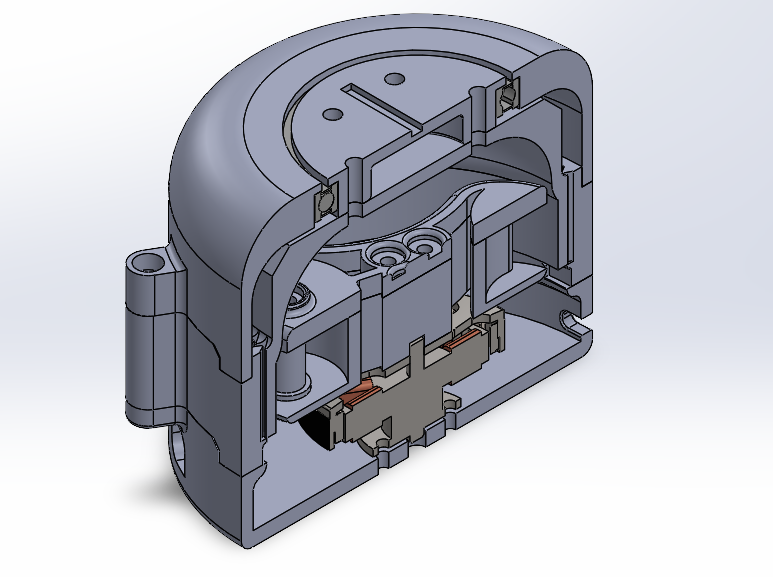
Section
Advanced "Pancake-Type" Flexspline Prototype
Drove the structural design through successive iterations utilizing radial deflection limits and bending stress analysis as absolute primary constraints.
- Envelope Optimization: Engineered a custom flexspline cross-section that achieves high "cup-style" geometric efficiency within a significantly reduced axial envelope, resulting in an ultra-compact "pancake" form factor.
- Deflection Isolation: Structurally isolated the flexspline wall so that primary radial deflection does not transmit destructive interference to the output disk.
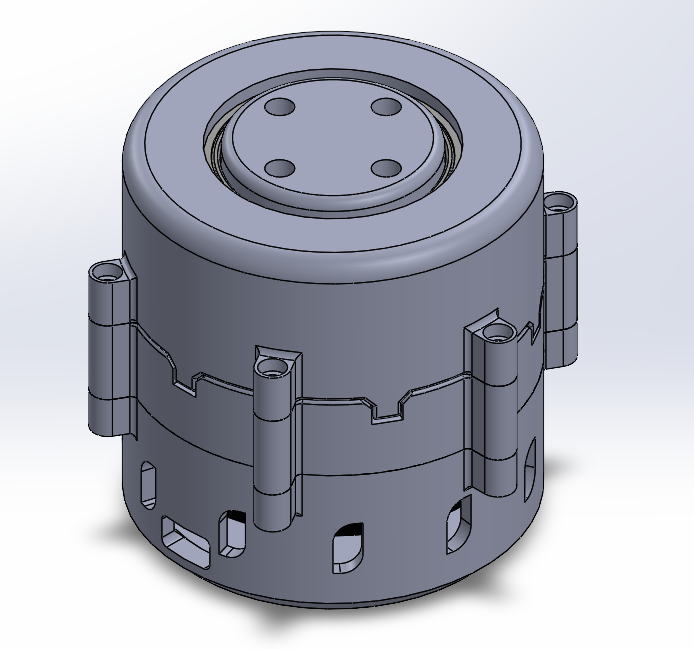
Isometric View
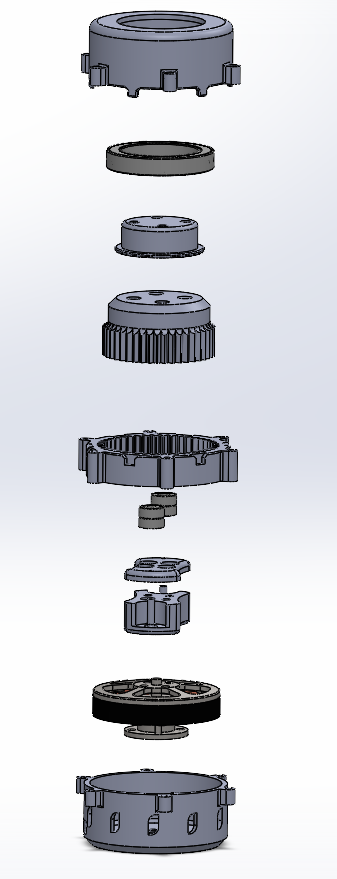
Exploded View
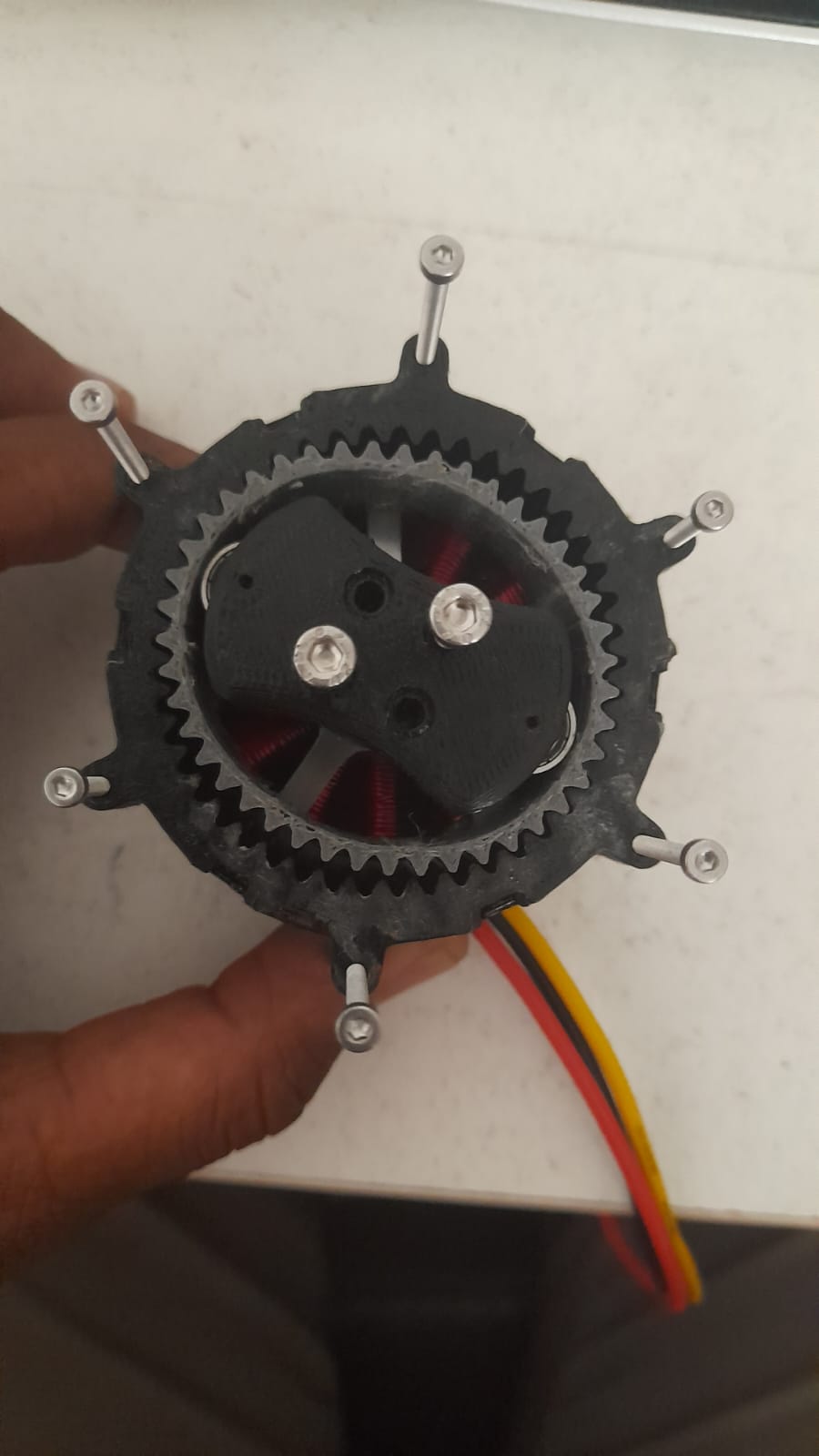
Physical hardware execution of the ultra-compact pancake-type harmonic prototype.